What happens to a team when they are under time pressure, working with a lack of information, and are they interdependent?
Escape rooms not only create an exciting play space, but also situations that reveal real-life behavioral patterns. This is complemented by an external, independent trainer's observation and feedback from me, a game psychologist - a trainer with a professional eye, which helps the team understand how it works together - and what would be worth changing.




How does it work?
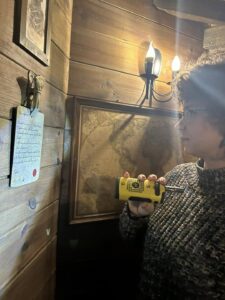
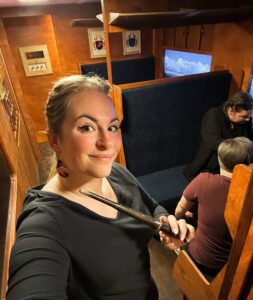
The team plays in a pre-selected escape room, while the trainer watches from the background as an "invisible eye".
The game is followed by a structured feedback session (in person or online), where participants can get an idea of, for example:
✦︎ how they communicate under pressure
✦︎ who makes decisions and how
✦︎ Does dominance, passivity or cooperation appear?
✦︎ how conflicts are handled
✦︎ how information is shared
✦︎ who takes on what role spontaneously
✦︎ what happens when you make a mistake
✦︎ how flexibly they can redesign
IMPORTANT! This is not an "evaluation" or a "telling" - but rather a way to help with realizations and aha-experiences by examining certain playful moments and human actions from a different perspective, paralleling them with real life.
Why an escape room?
✔ Real situation
✔ Stake and emotion
✔ Maskless operation
✔ Instant experience
✔ Easily connected to workplace reality
An escape room is a safe, playful space to show the true dynamics of a team - often faster and more honestly than a classic training session.

Reka Nadai Playful trainer, group dynamics and collaboration development expert, with over a decade of experience in developing teams and leaders. Member of the Coaches Training Camp Association, TEDX speaker, teaches with his own playful methodology.
In his work not as a tool, but as a use as a mirror: creates situations in which the participants' real functioning, decision-making patterns and communication are revealed naturally. As a trainer, he is particularly strong in without judgment, yet provide accurate and in-depth feedback on team dynamics.
He believes that the greatest learning occurs where the experience, emotion and recognition meet.